
OTTERS ABOUT
OTTERS ABOUT
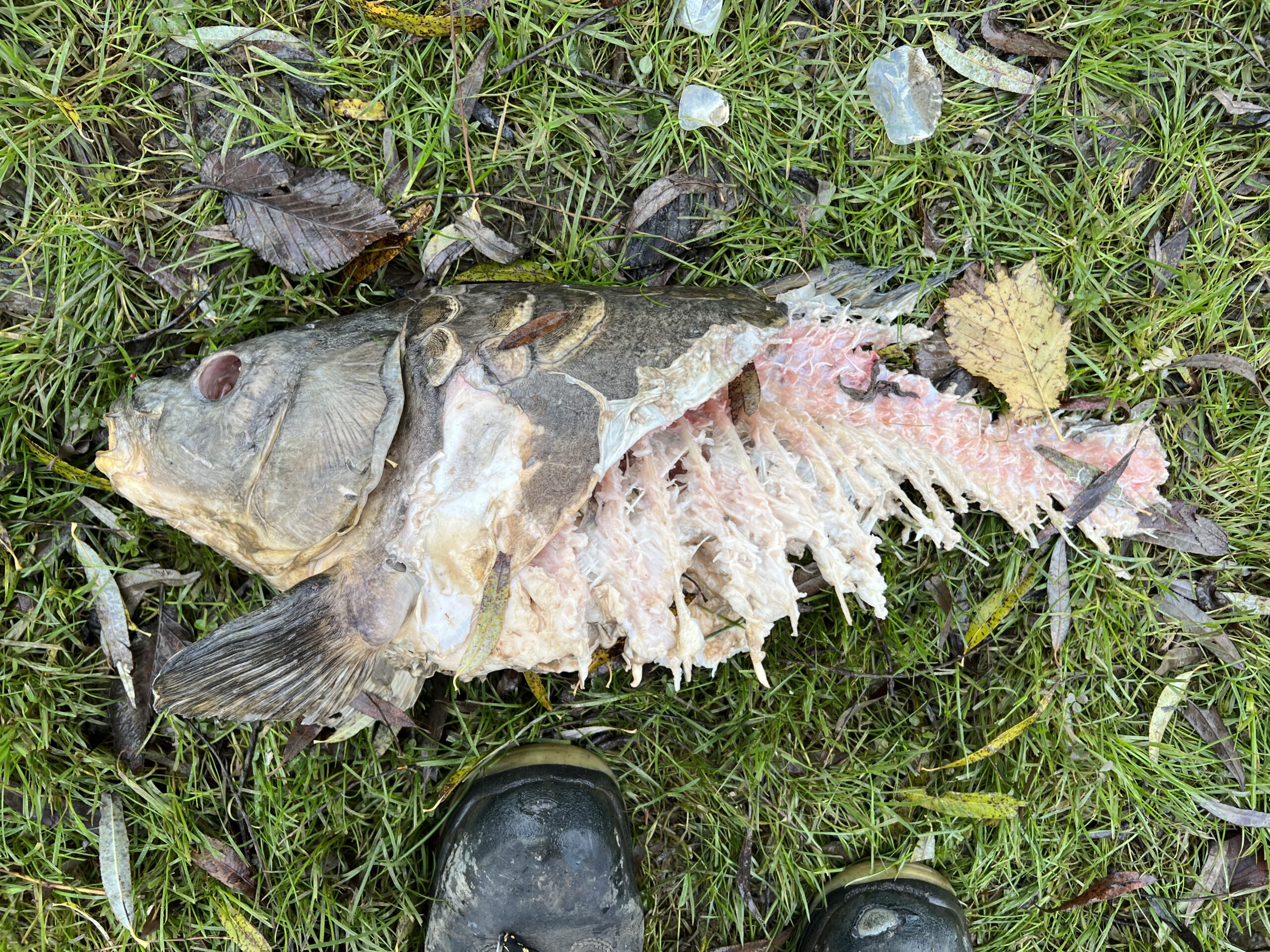
A gruesome find perhaps but more evidence that Otters are once again thriving in the Great Ouse Valley. We have been aware of this for a time as sightings have become more frequent, although these are usually confined to early mornings or evenings. The best conditions occur in summer when the weather is calm and settled and the surface smooth. An Otter is a master swimmer, alternately rising to breathe with nostrils flared and then effortlessly sinking in a graceful dive, the streamlined body arching from the water until the tail flips up before disappearing. A line of bubbles marks its progress until the head rises again a surprising distance away. To see a mother and cubs moving along in this way is a real treat – a sighting you never forget.
Or, failing that, clues an Otter is about include firstly, signs of activity on the bank. This may be spraint – Otter poo formed of indigestible fish scales. They glint on the ground and look somewhat like cigarette ash, but with an aroma quite sweet and reminiscent of musty jasmine. Be careful though as you bend down to test this …
The second, more obvious sign is a fish carcass, as here. This is, or was, a large carp, lying beside a marina lake December. At this time of year the river is often in spate, fast and coloured, making it less easy for any fish eater to locate its prey. Off the main river however, a deep lake is a haven for fish, especially large ones. The flesh has been picked from the bones but the bony head remains untouched. A useful catch in the depths of winter – and perhaps with a family in tow to feast alongside.
Thanks to Rob at the boatyard for the photograph.


I was walking through a field towards the Godmanchester lakes today, 10th Octobet around 14.00 and an otter crossed my path heading from the river. So privileged to see him/her. Later my dog found a lot of fish scales at the side of the river, for him a reason to roll! Unfortunately, I did not have my camera with me to record what I may not see again.